
White Gold vs. Platinum: Which Fine Jewelry Metal Is Right for You?

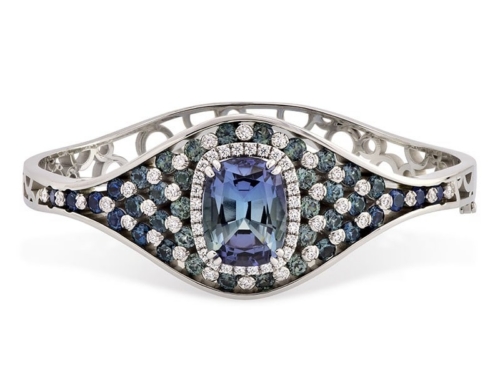
Interlace Cuprian Tourmaline Pendant
When selecting a foundation for fine jewelry, the metal you choose is more than a backdrop; it is a vital component of the piece’s engineering and artistry. Both white gold and platinum are esteemed in the world of high-end design, yet they offer distinct physical properties that influence how a piece wears over a lifetime. Whether you are commissioning a custom engagement ring or selecting an heirloom-quality accessory, understanding these nuances ensures your jewelry remains as enduring as the occasion it marks.
Here, we provide the technical insight you need to navigate these choices. By looking at density, composition, and long-term maintenance, we’ll help you find the metal that best fits your lifestyle and your personal style.
Understanding the Technical Composition
The primary difference between these metals begins at the molecular level. While they may appear similar to the untrained eye, their chemical makeup dictates everything from how they feel on your hand to how they protect your gemstones.
The Innovation of X1 White Gold
Traditional white gold is an alloy of yellow gold and white metals such as palladium or nickel. In the broader jewelry industry, this metal usually requires rhodium plating to mask a faint yellowish tint. However, Coffin & Trout utilizes X1 white gold, a Level 1 Color-Rated alloy that represents a significant advancement in metallurgical science.
- Superior Whiteness: X1 is engineered to be “extreme white.” It maintains a bright, platinum-like finish naturally without the warm undertones often found in standard white gold.
- The End of Rhodium Plating: Unlike standard white gold, X1 does not require rhodium plating to achieve its luster. This innovation eliminates the need for the biennial “dipping” process, ensuring your jewelry looks as beautiful in a decade as it does today.
- Engineered Hardness: X1 is significantly harder than traditional white gold alloys. This structural integrity provides superior resistance to the daily rigors of wear, making it an excellent choice for intricate fashion rings.
The Eternal Nature of Platinum
Platinum is a naturally white noble metal, used in our studio at 90–95% purity. It is prized for its substantial weight and remarkable density, offering a tactile sense of luxury that is immediately recognizable.
- Naturally Hypoallergenic: Platinum’s high purity makes it the ideal choice for those with sensitive skin or nickel allergies.
- Material Density: Platinum is a “noble” metal, valued for its rarity and its prestigious weight.
- Gemstone Protection: Its density and strength allow for incredibly secure settings. The prongs of a platinum setting are highly resistant to breaking, offering peace of mind for Masterpiece collection pieces.
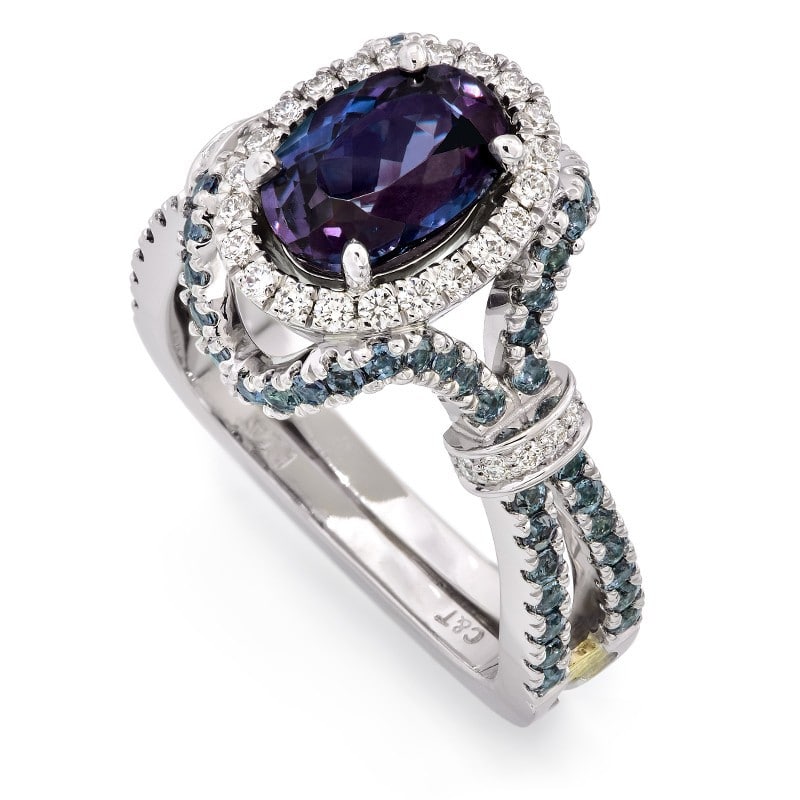
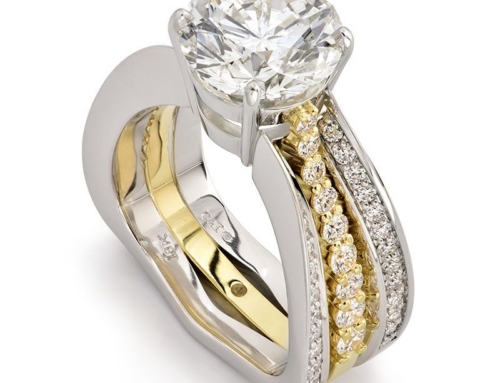
Evolve Platinum Alexandrite Ring
Durability and Maintenance: A Comparative View
A common misconception is that “durable” means the same thing for every metal. In reality, X1 white gold and platinum handle wear in fundamentally different ways.
Surface Integrity and Shine
X1 white gold possesses a higher surface hardness than platinum. This physical property makes it more resistant to surface abrasions and microscratches. For the wearer, this translates to a piece that maintains its mirror-like, high-polish shine for a longer duration between professional services.
The Physics of Wear
While X1 white gold excels at resisting surface marks, platinum offers a different type of longevity. Platinum is a more malleable metal; when it is struck or scratched, the metal molecules are merely displaced—”pushed” aside rather than flaked away. Over years of wear, a platinum ring retains its original volume and weight. In contrast, while white gold is harder and more scratch-resistant, the microscopic scratches it does receive result in a minute loss of metal over decades.
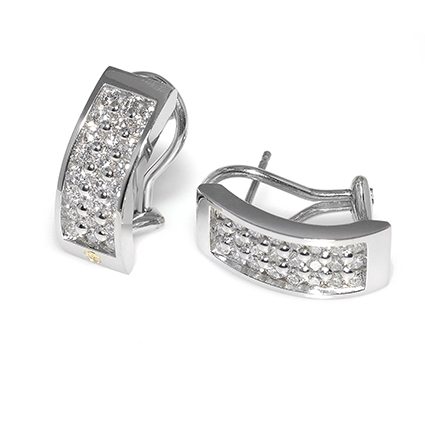
Three Row Paragon Pave Diamond Earrings
|
Feature |
X1 White Gold |
Platinum |
|---|---|---|
| Natural Color | Extreme White (Level 1) | Naturally Silvery-White |
| Maintenance | Low (No rhodium needed) | Minimal (Polishing optional) |
| Feel | Lightweight & Comfortable | Dense & Substantial |
| Sensitivity | Contains Nickel | Hypoallergenic |
Explore the C&T Difference to see how our master jewelers utilize these metals in our in-house manufacturing process.
The Architectural Advantage of the Paragon Design
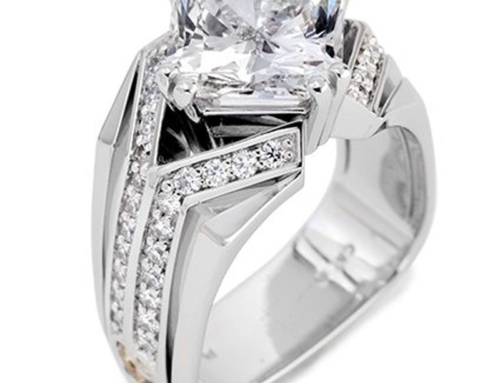
Metal choice is particularly important when considering our exclusive Paragon “Shape of the Finger” design. Unlike traditional round rings, the Paragon is engineered to follow the natural, somewhat squared contour of the human finger.
When crafted in X1 White Gold, the Paragon shape feels incredibly light and unobtrusive. When rendered in Platinum, the added density harmonizes with the anatomical design to further prevent the ring from spinning, ensuring the center stone always faces upward.
Featured White Gold & Platinum Designs
Our commitment to uncompromising artistry is best seen in our finished works. Here are a few selections that showcase the “Art of Precision”:
- Three-Row Paragon Pave Diamond Earrings: These earrings utilize our technical expertise in pave setting to create a seamless wall of brilliance, perfect for those who value architectural detail.
- Evolve Platinum Alexandrite Ring: Featuring a rare color-changing alexandrite, this piece is set in dense platinum to ensure the security of a world-class gemstone.
- Interlace Cuprian Tourmaline Pendant: This design highlights our passion for rare colored gems and fluid, engineered forms. Set in X1 White Gold, the metal’s natural brightness perfectly complements the electric blue of the tourmaline.
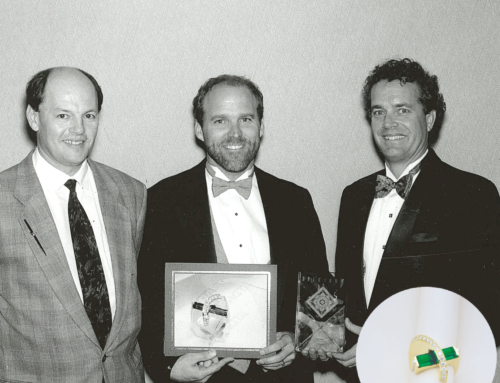
- Deco Spinel and Meteorite Platinum Men’s Ring: This ring combines the permanence of platinum with the ancient history of meteorite, exemplifying our innovative use of materials in our men’s collection.
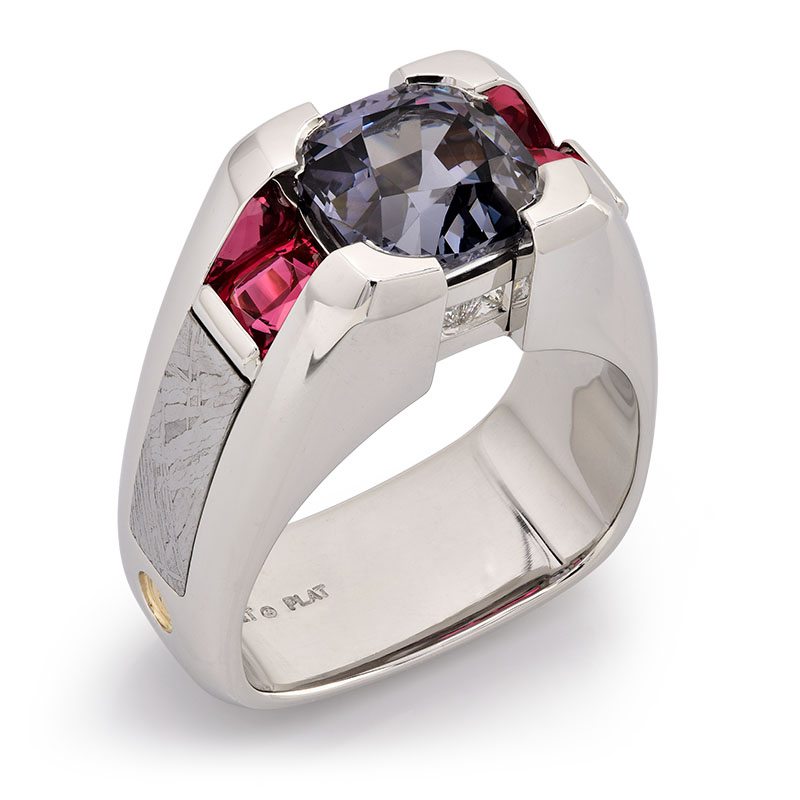
Deco Spinel and Meteorite Platinum Men’s Ring
Engineering a Lasting Legacy
Choosing between white gold and platinum is a decision that involves your aesthetic preference, skin sensitivity, and how you interact with your jewelry daily. At Coffin & Trout, we don’t just sell jewelry; we build it. Every piece is an heirloom in the making, designed with a “form follows function” philosophy that ensures the final design is as comfortable as it is beautiful.
Whether you are drawn to the innovative hardness of X1 White Gold or the timeless, hypoallergenic density of Platinum, our team is here to guide you through the selection process. Visit our Chandler showroom to feel the weight of these metals for yourself and experience the “Art of Precision” firsthand.
FAQs: White Gold vs Platinum Fine Jewelry
Does X1 White Gold turn yellow over time? No. Traditional white gold alloys often reveal a yellowish tint as the rhodium plating wears off. Because X1 is a Level 1 color-rated alloy, the “white” is consistent throughout the metal. There is no yellow layer to be revealed, so your piece remains bright without the need for maintenance “dipping.”
Why is platinum more expensive than white gold? The price difference is driven by purity and density. Platinum is significantly denser than gold; a ring made of platinum will weigh about 60% more than the exact same ring made of 14K gold. Since precious metals are sold by weight, the higher volume of metal required for platinum naturally increases the cost.=
Is platinum scratch-proof? No metal is truly scratch-proof. While platinum is very durable, it is softer than X1 White Gold on the surface. However, when platinum is scratched, the metal is simply displaced rather than lost. This creates the famous “patina” of fine platinum jewelry.
Is X1 White Gold hypoallergenic? X1 White Gold contains nickel to achieve its superior hardness and color. If you have a known, severe nickel allergy, we strongly recommend choosing Platinum, which is 95% pure and naturally hypoallergenic.
How often should I have my jewelry cleaned? Regardless of the metal, we recommend a professional cleaning and inspection every six months. This allows our master jewelers to check the integrity of the prongs and ensure your gemstones remain secure. Schedule a service appointment at our Chandler location today.