Why Luxury Pearl Jewelry Elevates Your Style Instantly
Luxury Types of Pearls and How They Instantly Elevate Your Look
Building a fine jewelry collection requires a deep understanding of how a gemstone comes to life. While faceted gemstones rely on a diamond cutter to reveal their optical performance, a pearl enters the studio as a fully realized, organic gemstone. Every variety possesses unique structural and visual characteristics that dictate how the final piece interacts with light and complements your wardrobe. Recognizing these distinctive traits allows you to identify pieces that transition a classic gemstone into a sharp, contemporary statement that alters the entire balance of an ensemble.
To see how these principles are applied to custom jewelry design, explore the pieces within the complete Coffin & Trout Pearl Collection.
Defining the Core Types of Pearls
Natural variations in aquatic environments yield gems of vastly different scale, color, and luster. When choosing fine jewelry, the journey begins by identifying the specific luxury types of pearls that fit your aesthetic.
South Sea Pearls: Exceptional Dimensions and Satin Luster
Sourced from the deep waters of Australia and the Philippines, South Sea pearls represent a rare tier of gem cultivation. Grown in the Pinctada maxima oyster, these pearls are celebrated for their substantial size—frequently ranging from 9mm to over 20mm—and a deep, soft luster.
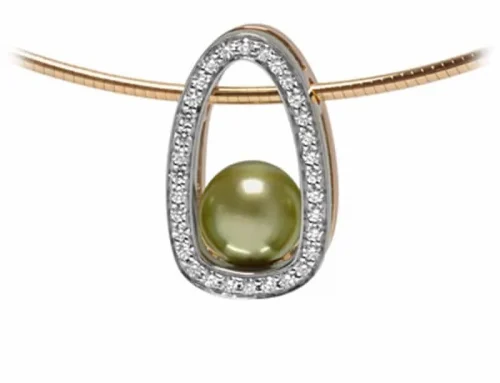
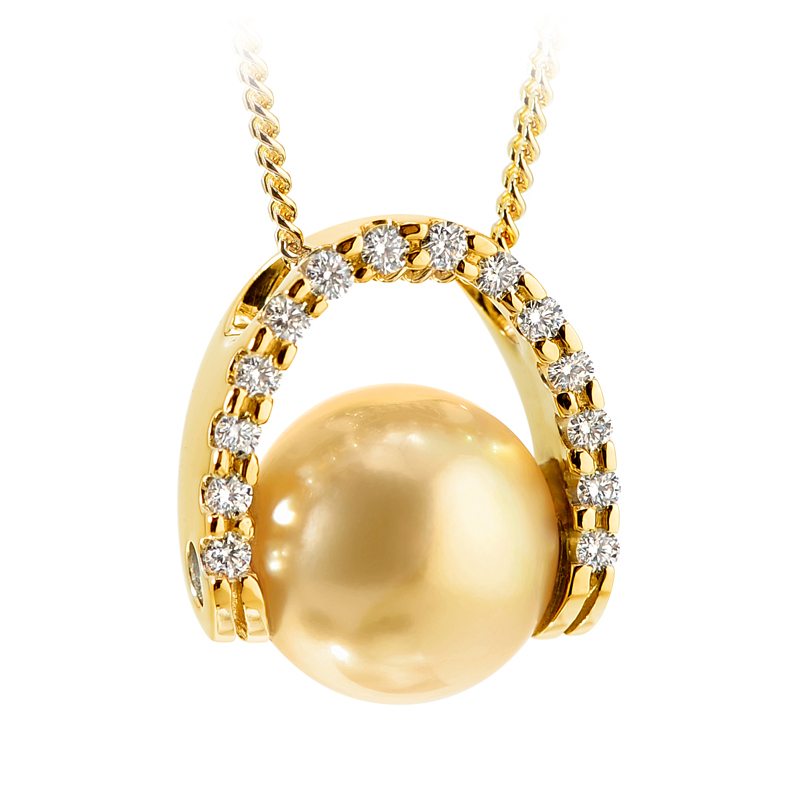
Among the rarest of all varieties are Golden South Sea pearls, prized for deep honey-and-champagne tones that bring immense warmth to a piece. This natural gold hue instantly warms the skin tone and infuses an outfit with rich, luminous color, an effect highlighted in the Axis Golden South Sea Pearl and Diamond Yellow Gold Pendant, which frames a 9.8mm golden pearl within a sweeping arc of round brilliant diamonds set in 18k yellow gold, turning a simple neckline into a commanding focal point.
Tahitian Pearls: Natural Dark Tones and Vivid Overtones
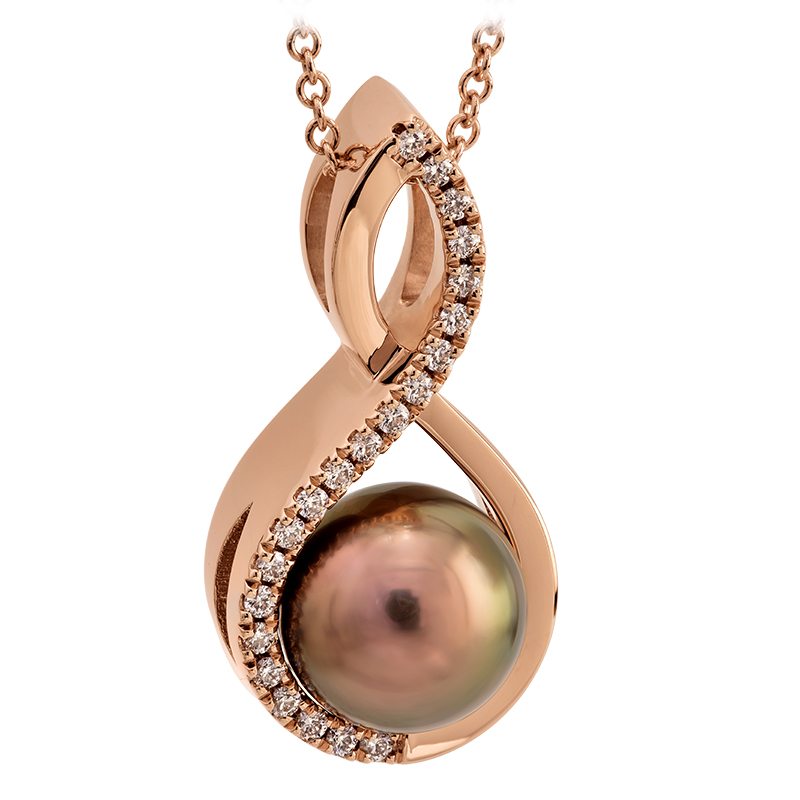
Harvested across the atolls of French Polynesia, Tahitian pearls are instantly identifiable by their dark bodies. Rather than simple charcoal or black, high-caliber Tahitian pearls feature iridescent overtones of peacock green, deep blue, aubergine, and copper. These moody tones break away from traditional jewelry boundaries, introducing a modern edge that elevates tailored wardrobes or dark evening wear with a dramatic pop of color.
To break away from conventional settings, contemporary designs pair these deep, enigmatic hues with detailed, contrast-driven metalwork. The Paragon Tahitian Pearl Yellow Gold Ringshowcases a 9.4mm Tahitian pearl set against the warmth of an 18k yellow gold band. The striking color interplay and meticulous, hand-engraved filigree detailing along the shoulders of the band elevate the organic gemstone with artisan precision, turning a ring into an instant conversation piece.

Akoya Pearls: The Traditional Sphericity Standard
Grown primarily in Japan, Akoya pearls are the classic choice for multi-strand necklaces and uniform studs. Renowned for their near-perfect sphericity and mirror-like reflective qualities, they offer a sharp, bright shine that immediately draws the eye. An Akoya piece brings crisp, clean symmetry to an outfit, immediately brightening the face and adding an undisputed polished finish to formal attire.
Freshwater Pearls: Pastel Hues and Approachable Elegance
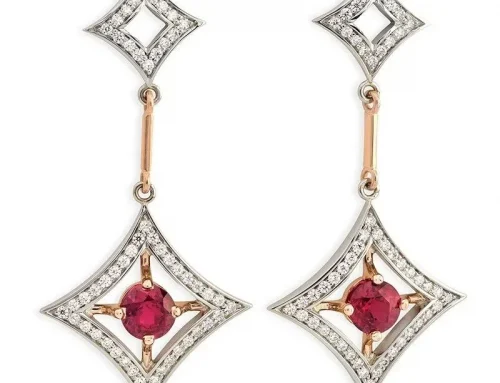
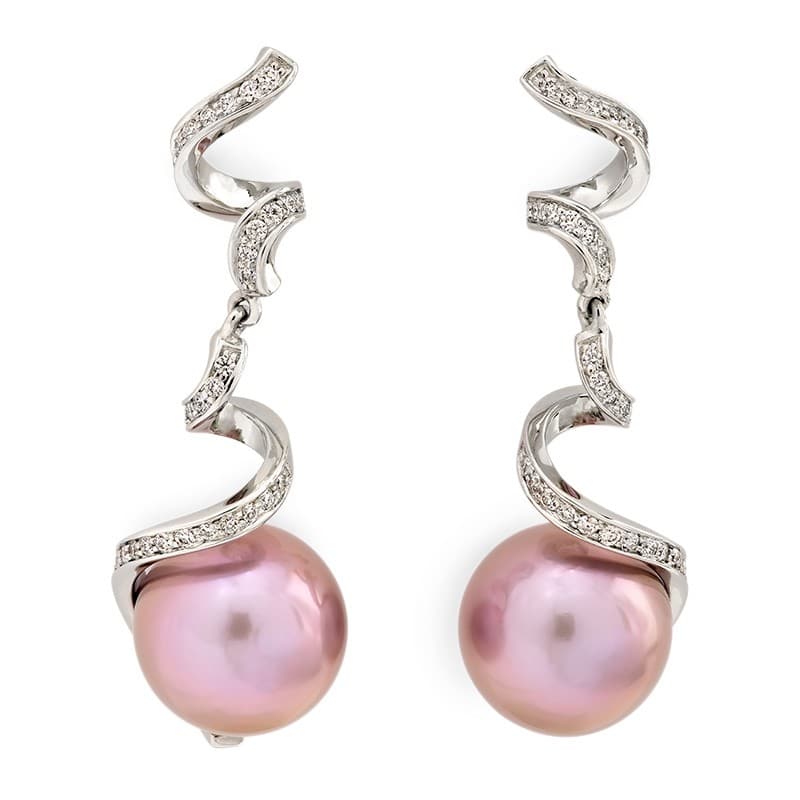
Cultivated in rivers and lakes, Freshwater pearls offer an expansive spectrum of natural pastel shades, including lavender, peach, and soft pinks. Selecting top-tier, highly lustrous Freshwater gems brings an approachable elegance to daily ensembles, softening structured outfits with subtle color. The Freshwater Pink Pearl Earrings demonstrate this versatility, suspending purplish-pink Freshwater pearls from fluid ribbons of 14k white gold set with round brilliant diamonds to frame the face with gentle, moving light.
Evaluating Pearl Quality: The Craftsman’s Standards
A diamond’s brilliance is revealed through its cut facets, but a pearl’s beauty is entirely organic, relying on the structural density of its nacre. To separate commercial-grade stock from true investment-level specimens, we evaluate every gem against four critical criteria:
A casual collector often focuses solely on diameter, but a master grader evaluates the interplay of luster and overtone. We curate exclusively for natural brilliance, completely rejecting clarity-enhanced, fracture-filled, or laser-drilled elements across all our custom creations. Furthermore, every accent diamond paired alongside our pearls must meet a strict D-F color and VS clarity threshold or better, ensuring the setting matches the purity of the center gem.
Curation and Styling: Bringing Pearls into Modern Context
Integrating luxury pearls into a contemporary wardrobe requires a thoughtful approach to proportion, setting choice, and context.
Pairings by Occasion
- Formal Events: Select a high-contrast statement piece. A singular, significant South Sea pendant set against an open neckline offers a clean focal point that pairs well with minimalist evening wear.
- Executive Wardrobes: Substitute standard gold hoops with high-luster pearl studs or structured drops. The clean presentation complements tailored suiting without competing with your presence.
- Everyday Sophistication: Do not save these treasures strictly for evening wear. Introducing a Tahitian pearl ring or soft pink Freshwater drops alongside a fine knit sweater and denim brings a refined touch to routine outfitting.
The Importance of In-House Manufacturing
Mass-produced catalog jewelry frequently relies on standard, pre-cast settings that squeeze pearls into generic prongs, risking damage to the nacre. True customization means building the metal around the exact dimensions of the unique organic gem.
Utilizing in-house CAD design, 3D prototyping, and master bench work, Coffin and Trout artisans account for every micro-millimeter of a pearl’s shape. This bespoke process guarantees that the final piece is balanced, comfortable to wear, and structurally sound for generations to come.
Preserving Your Heirloom Pieces
Because pearls are organic, they require deliberate care to maintain their deep glow over time.
- The Final Touch: Always apply cosmetics, perfumes, and hairsprays before putting on your pearl jewelry. The chemical compounds in these products can slowly dull the natural nacre.
- Gentle Cleansing: After each wear, wipe the surface gently with an exceptionally soft, lint-free cloth to remove trace skin oils. Never submerge them in liquid cleaners or ultrasonic machines.
- Isolated Storage: Store your pieces flat in a dedicated, fabric-lined pouch or partition. Keeping them separate from harder gemstones like diamonds and sapphires prevents accidental surface scratching.
Exceptional Pearl Jewelry Craftsmanship and Design Longevity
A pearl is a reflection of the environment in which it was formed, and the jewelry that holds it should reflect an identical commitment to its origin. Selecting the deep golden warmth of a South Sea pearl or the shifting, iridescent overtones of a Tahitian pearl marks an intentional investment in exceptional bench craftsmanship. By selecting specimens graded to rigorous benchmarks and marrying them with tailored, custom settings, these organic treasures easily transition across wardrobes and lifetimes, standing as future history.
To explore our fully customized, artisan-built pearl acquisitions, view the complete Coffin and Trout Pearl Collection.
Frequently Asked Questions
What are the main luxury types of pearls used in fine jewelry?
The primary varieties used in high-end jewelry design include South Sea pearls, Tahitian pearls, and Akoya pearls. South Sea varieties are highly prized for their substantial scale and warm gold or silver-white satin luster. Tahitian pearls are sought after for their natural dark body colors and vibrant oil-slick overtones. Akoya pearls represent the traditional standard, favored for their mirror-like reflectivity and roundness.
How do luxury types of pearls differ from commercial-grade pearls?
Investment-grade specimens are distinguished by a heavy, dense nacre thickness accumulation, sharp mirror-like luster, and natural surface purity. Commercial-grade pearls frequently rely on synthetic enhancements, laser drilling, or artificial color treatments to conceal structural flaws. True high-end pearls retain completely organic coloration and deep, natural brilliance.
Why do South Sea pearls command a higher value?
Sourced from the deep, volatile waters of Australia and the Philippines, these pearls are grown within the massive Pinctada maxima oyster. Their cultivation period spans several years, resulting in exceptional millimeters in diameter, deep nacre development, and an unmatched depth of color that cannot be accurately replicated in mass production.
Can luxury pearls be worn comfortably for everyday wear?
Yes, provided they are secured within customized, structurally engineered settings rather than generic catalog castings. Rings mounted via custom CAD modeling protect the underlying nacre from friction and heavy impact, making them highly resilient options for modern daily style when following proper care guidelines.