Discover How Local Fine Diamond Jewelers Choose Perfect Cuts
How Local Diamond Jewelers Choose Exceptional Cuts and Shapes
Selecting a fine diamond is both an art and a science—one that blends technical precision with aesthetic vision. At the heart of this process is the diamond cut: the single most influential factor shaping a gemstone’s brilliance, value, and lasting appeal. While laboratory reports provide essential data, true connoisseurship goes beyond grades and certificates, demanding a hands-on appreciation of craftsmanship and the nuanced qualities that set an extraordinary stone apart.
Whether you seek a signature engagement ring or a future heirloom, understanding how cut and craftsmanship interact is key to making a confident, inspired investment. In this guide, you’ll discover the principles that define truly exceptional diamonds, learn how Coffin and Trout experts assess quality and value, and find practical tips for selecting a stone that reflects your taste. For inspiration and a curated selection, visit the Coffin and Trout Diamond Collection.
The Metrics of Radiance: Cut Grading Standards
Cut grading scales define the physical parameters that determine how efficiently a gem captures and reflects light. Reputable laboratory standards offer an objective framework, ensuring you can confidently verify the authenticity and structural integrity of your investment.
The GIA Grading Scale
The Gemological Institute of America (GIA) developed the universally recognized grading system known as the 4Cs: Cut, Color, Clarity, and Carat Weight. Diamond cut is evaluated using a combination of precise factors, including:
- Proportions: The relationships between a diamond’s depth, table, angles, and overall dimensions.
- Symmetry: How accurately the diamond’s facets are aligned and arranged.
- Polish: The smoothness and quality of the diamond’s surface after cutting.
- Brilliance: The amount of white light reflected from the diamond.
- Fire: Flashes of color seen as light disperses through the diamond.
- Scintillation: The sparkle produced as the diamond moves.
- Weight Ratio: How the diamond’s weight relates to its face-up appearance.
- Durability: The presence of features that could affect the diamond’s strength, such as thin girdles or pointed corners.
Cut is widely regarded as the most important of the 4Cs because it is the primary factor controlling a diamond’s beauty. While color, clarity, and carat weight each affect a diamond’s rarity and value, cut has the power to unlock a stone’s full optical potential. A well-cut diamond acts like a series of tiny mirrors, precisely angled to capture and reflect light back through the crown. This careful craftsmanship produces the brilliance, fire, and scintillation that make a diamond visually stunning.
Even a diamond with exceptional clarity and color will look lifeless if the cut is poor, while a masterful cut can maximize beauty, regardless of other attributes. GIA assigns cut grades ranging from Excellent to Poor to reflect this critical influence on the stone’s appearance.
Visual Appeal and Structural Integrity
In addition to basic proportions, two key finishing qualities further distinguish a diamond’s appearance:
- Visual Appeal and “Life”: The unique vitality, sparkle, and character a diamond displays when viewed in real-world lighting and from different angles—qualities that Coffin and Trout’s jewelers personally evaluate to ensure every diamond exceeds expectations beyond technical grading.
- Structural Integrity: The diamond’s resilience and freedom from artificial enhancements, such as fracture filling or laser drilling, ensuring long-term durability and natural beauty.
Deciphering Diamond Shapes and Cut Characteristics
Each diamond shape embodies a distinct character, employing a unique faceting arrangement that defines its visual identity. Selecting the ideal shape requires understanding how the diamond’s geometric structure influences its interaction with light.
A Detailed Look at Key Diamond Designs
Examining specific, expertly crafted Coffin and Trout pieces demonstrates how distinctive diamond shapes integrate into high-quality metalwork.
The Performance of the Round Brilliant
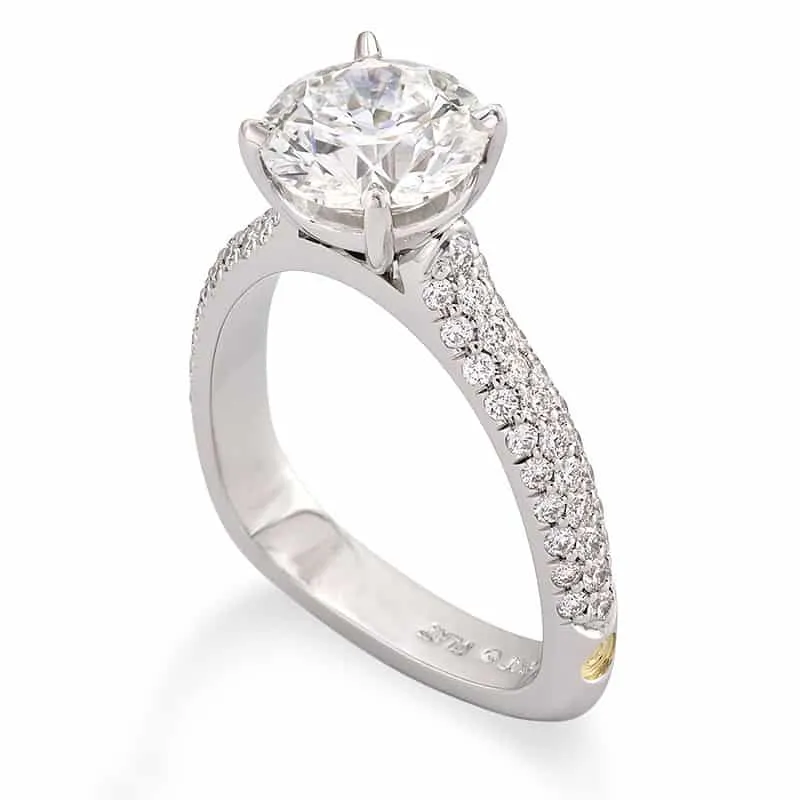
A classic round diamond demands mathematical precision to achieve its signature brilliance. Even subtle deviations in crown angles or pavilion depths can markedly diminish a stone’s natural radiance.
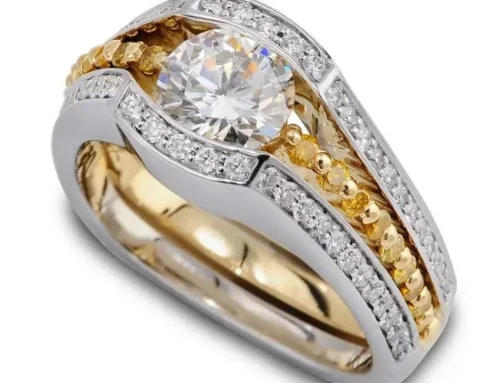
The Paragon Platinum and Round Diamond Engagement Ring presents a 2.03-carat round brilliant cut diamond set in platinum. The clean setting is accented by rows of pavé diamonds down the sides of the band, elevating the central stone’s light performance.
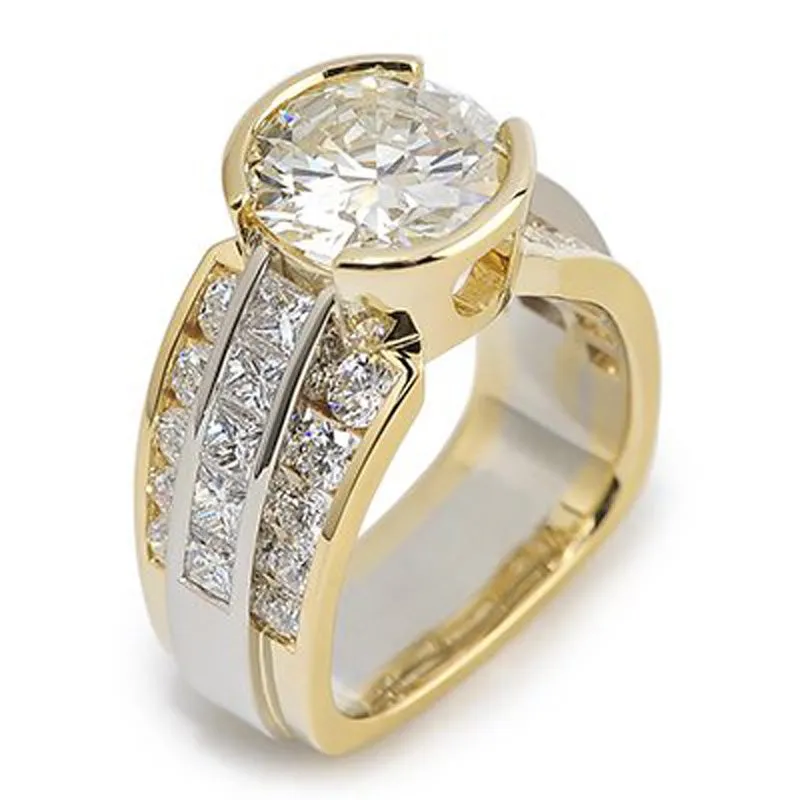
For a bolder presentation of the classic round shape, the Paragon Round Brilliant Cut Diamond Two-Tone Ring frames a substantial 4.14-carat round brilliant cut diamond within an 18k yellow gold and platinum semi-bezel. This design features an additional 2.81 carats of side diamonds set along a wide band.
The Geometry of the Princess Cut
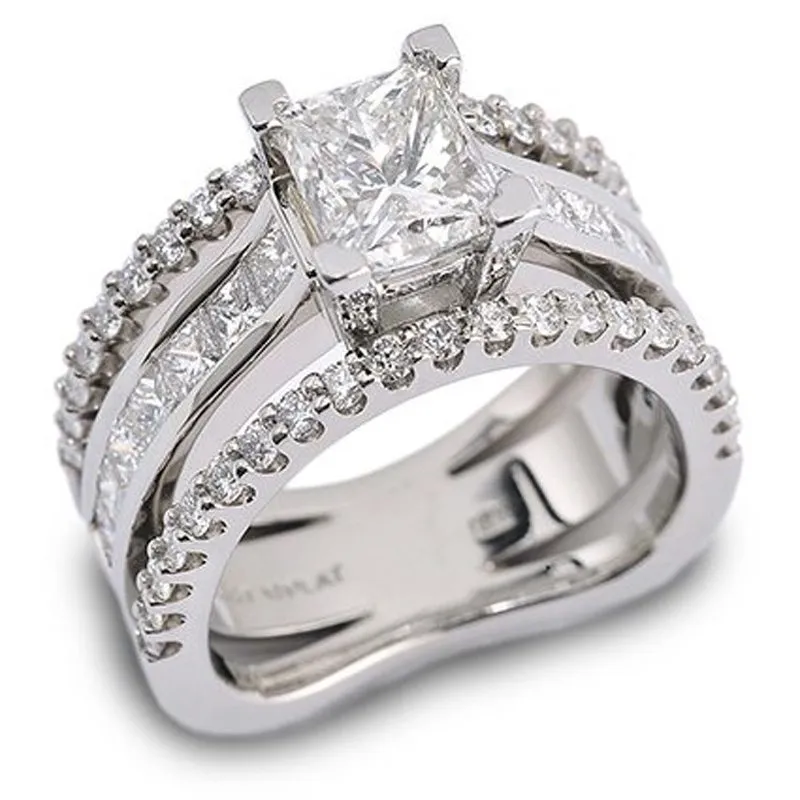
The princess cut features a geometric silhouette defined by sharp corners and a modified brilliant facet arrangement. This configuration delivers exceptional sparkle while maintaining a contemporary, square aesthetic.
The Interlude Platinum Princess Cut Three-Band Ring anchors a 1.51-carat princess cut diamond atop an openwork platinum setting, framed by rows of accent diamonds.
The Elegance of Step-Cut and Mixed-Cut Gems
Step-cut shapes, such as the traditional emerald cut, are characterized by elongated, parallel facets that emphasize the stone’s internal clarity and pure body color.
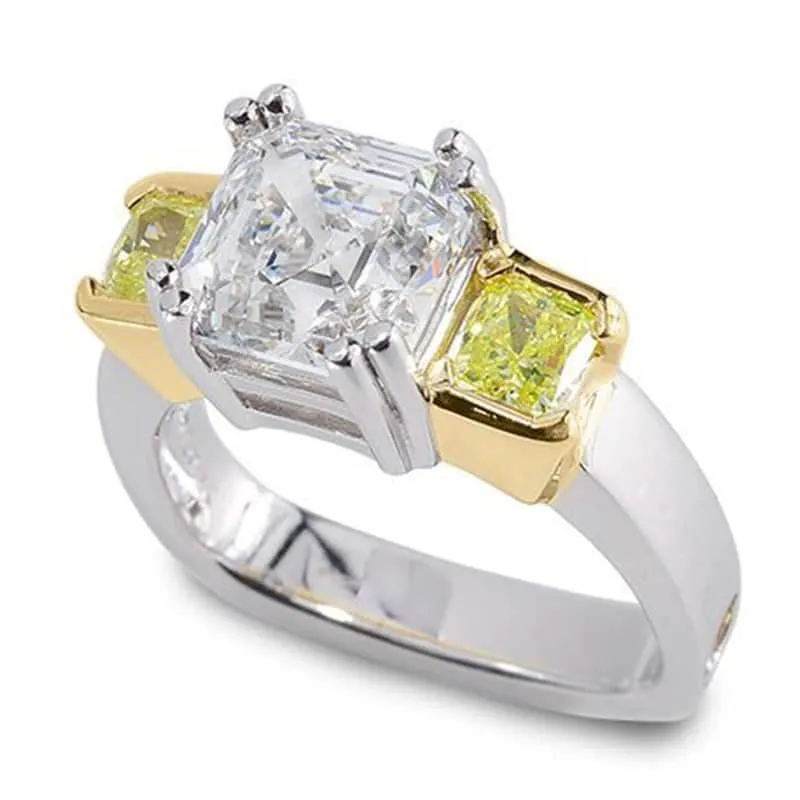
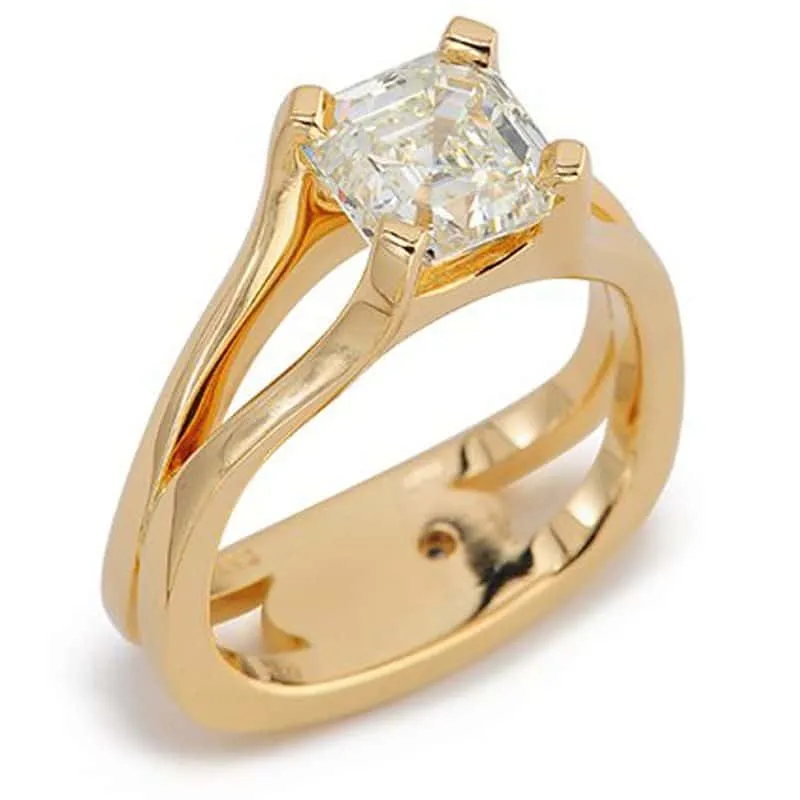
Both the Classique Emerald Cut and Natural Fancy Yellow Diamond 3-Stone Ring and the Interlace Square Emerald Cut Diamond and Yellow Gold Ring showcase square emerald cut diamonds—a sophisticated shape known for its clean, step-cut facets and contemporary silhouette.
The Classique ring features a 3.04-carat square emerald cut center diamond flanked by vibrant green-yellow side diamonds. Platinum is used for the center stone setting, while 18k yellow gold bezels enrich the warm hues of the colored stones.
The Interlace ring centers a 2.24-carat, faint-yellow square emerald-cut diamond within an 18k yellow gold split-shank band, creating a harmonious, monochromatic look that highlights the stone’s geometric elegance and subtle color.
The radiant cut is a classic example of a mixed cut, combining the step-cut facets of an emerald cut with the brilliant-cut facets of a round or princess diamond. This hybrid faceting pattern maximizes sparkle while concentrating color within the stone for exceptional intensity. The Paragon Yellow Radiant Cut Diamond Platinum Ring mounts a 4.41-carat fancy yellow radiant cut diamond into an 18k yellow gold basket, supported by a platinum band with pavé-set round brilliant diamonds down the shoulders.ì
The Selection Process: How Craftsmen Evaluate Diamonds
Coffin and Trout’s master jewelers look beyond standard laboratory paper reports to inspect diamonds firsthand under intense magnification.
Advanced Evaluation Tools
Inspecting a diamond involves an array of specialized tools:
- Gemological Microscopes & Loupes: These precision tools enable jewelers to examine the stone’s interior, ensuring that internal characteristics do not compromise the diamond’s durability or longevity.
- Light-Scattering Analysis: Experts observe how a diamond responds to real-world movement and varied lighting conditions. This hands-on assessment guarantees the diamond exhibits consistent brilliance from every perspective.
In-House Selection Standards
A rigorous selection process involves reviewing ten to twenty diamonds of the same official grade to identify the singular stone that demonstrates superior vitality and character. Additionally, ethical sourcing mandates that every diamond be conflict-free and completely free from artificial enhancements.
Important Consumer Note: At Coffin and Trout, integrity in fine jewelry means refusing to work with fracture-filled, laser-drilled, or clarity-enhanced diamonds . This discipline ensures that your chosen heirloom retains its structural integrity and beauty for generations.
Diamond Buying Myths, Busted
Even savvy shoppers encounter persistent myths about diamond cut and its impact on a stone’s beauty.
Myth: A higher carat weight always means a more beautiful diamond.
Fact: While size is impressive, a smaller diamond with an exceptional cut will often outshine a larger stone with a mediocre cut. Cut quality determines sparkle and visual appeal.
Myth: Color is more important than cut.
Fact: While colorless diamonds are rare, brilliance and sparkle depend far more on cut quality. Even near-colorless stones can dazzle if the cut is superior.
Myth: Any diamond with an “Excellent” cut grade will look the same.
Fact: Two diamonds with the same cut grade can look very different in person. Factors like facet arrangement, proportions, and craftsmanship all affect a diamond’s personality and sparkle—so hands-on evaluation matters.
Myth: Lab reports are all you need to choose a diamond.
Fact: Reports are helpful, but nothing replaces the expertise of Coffin and Trout’s in-house jewelers, who handpick diamonds for their overall beauty, craftsmanship, and visual appeal.
Choosing with Clarity and Vision
Selecting an exceptional diamond with Coffin and Trout is a journey that goes beyond technical grades, blending careful analysis with personal taste and vision. Whether you are searching for a lasting heirloom or a unique expression of style, the expertise and guidance of Coffin and Trout will ensure your diamond continues to inspire for generations to come.
Frequently Asked Questions
What is the technical difference between diamond shape and cut?
Diamond shape refers exclusively to the outer silhouette of the stone when viewed from above—such as a round, square, or emerald geometric profile. Diamond cut is an architectural measure of engineering precision. It dictates the exact angles, proportions, and mathematical alignment of the facets. While shape reflects your personal style, the cut is what dictates the physics of light performance and unlocks a stone’s true brilliance.
Why do two diamonds with the exact same “Excellent” cut grade look completely different in person?
A laboratory report provides a baseline data grid, but it cannot measure a diamond’s “life” or unique personality. Subtle variations in facet alignment and crown angles can mean the difference between a stone that merely reflects light and one that truly dances. This is why Coffin and Trout master jewelers personally evaluate ten to twenty stones of identical paper grades under intense magnification just to select the singular stone that meets Coffin & Trout standards.
How does a poorly cut diamond affect a stone’s light performance and value?
A diamond functions as a precise series of mirrors. When a stone is cut too shallow or too deep to maximize raw carat weight rather than beauty, light leaks out of the sides or escapes straight through the bottom of the pavilion. This results in a dull, lifeless center. A masterfully proportioned cut optimizes optical physics, reflecting light directly back through the crown to maximize sparkle—proving that an expertly cut smaller diamond will easily outshine a poorly cut larger stone.