Discover Types of Pearls That Transform Your Look Instantly
The Art of Luster: How Luxury Types of Pearl Elevate Your Style Instantly
Few pieces transform a look as effortlessly as a well-chosen pearl. With their natural luster and understated elegance, pearls bring a level of refinement that feels both timeless and distinctly modern.
At Coffin and Trout, pearls are not just classic adornments but a study in craftsmanship and intention. Each one reflects a careful balance of nature and design, where organic beauty meets precision metalwork.
Choosing luxury pearl jewelry comes down to understanding what sets exceptional pieces apart. Not all pearls are created equal—and their differences define their beauty.
The Distinguished Varieties of Luxury Pearls
The environment in which a pearl grows—the temperature of the water, the specific species of mollusk, and the length of the cultivation period—dictates its final personality.
Akoya Pearls
Renowned for their classic appeal, Akoya pearls are the traditional choice for those who value high luster and near-perfect symmetry. Primarily cultivated in the cool waters of Japan, they typically range from 2mm to 10mm. Their surface is characterized by a mirror-like shine that reflects light with exceptional clarity.
South Sea Pearls
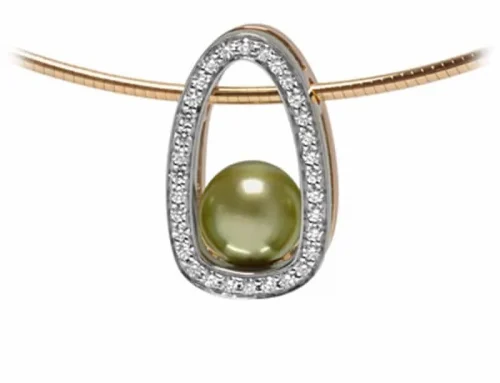
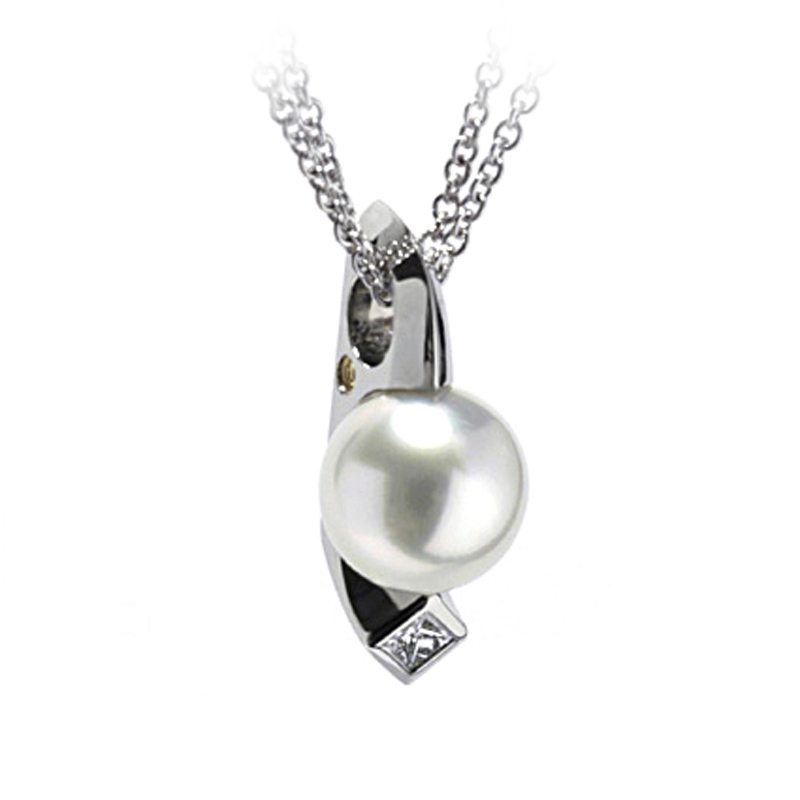
Often referred to as the Queen of Pearls, South Sea pearls are prized for their impressive size and satin-like luster. Growing in the warm waters of Australia, Indonesia, and the Philippines, these pearls often exceed 10mm. They are celebrated for their rich, creamy palettes, ranging from bright white to deep, honeyed gold. A prime example of this radiance is the Axis South Sea Pearl and Diamond Pendant, which showcases the pearl’s substantial presence.
Tahitian Pearls
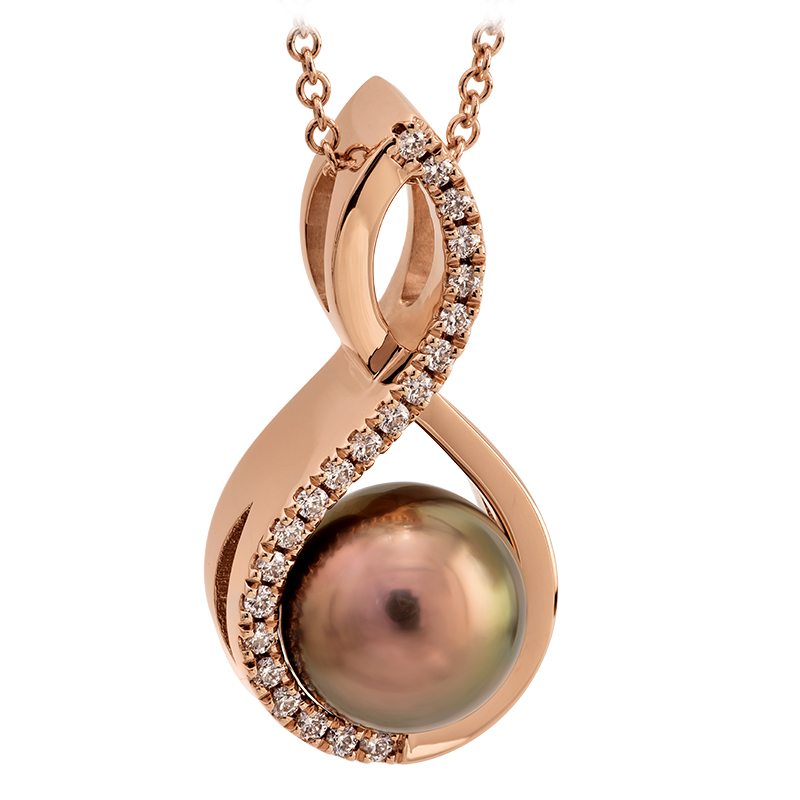
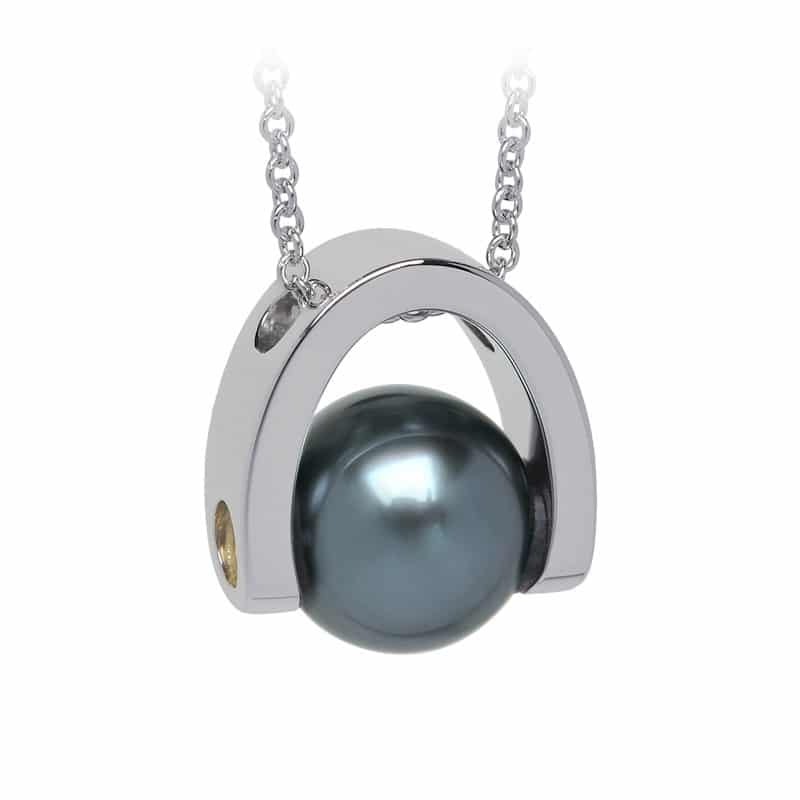
Cultivated in the lagoons of French Polynesia, Tahitian pearls offer a dramatic departure from tradition. Though often referred to as black pearls, they actually display a spectrum of iridescent overtones, including peacock green, silver, and deep aubergine. Their exotic hues make them a favorite for contemporary designs, such as the Axis Tahitian Pearl Pendant or the Interlace Tahitian Pearl and Rose Gold Pendant.
Freshwater Pearls
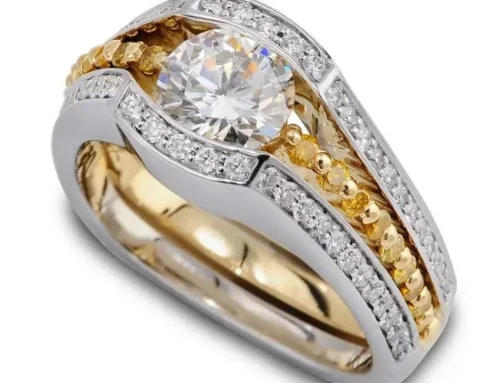
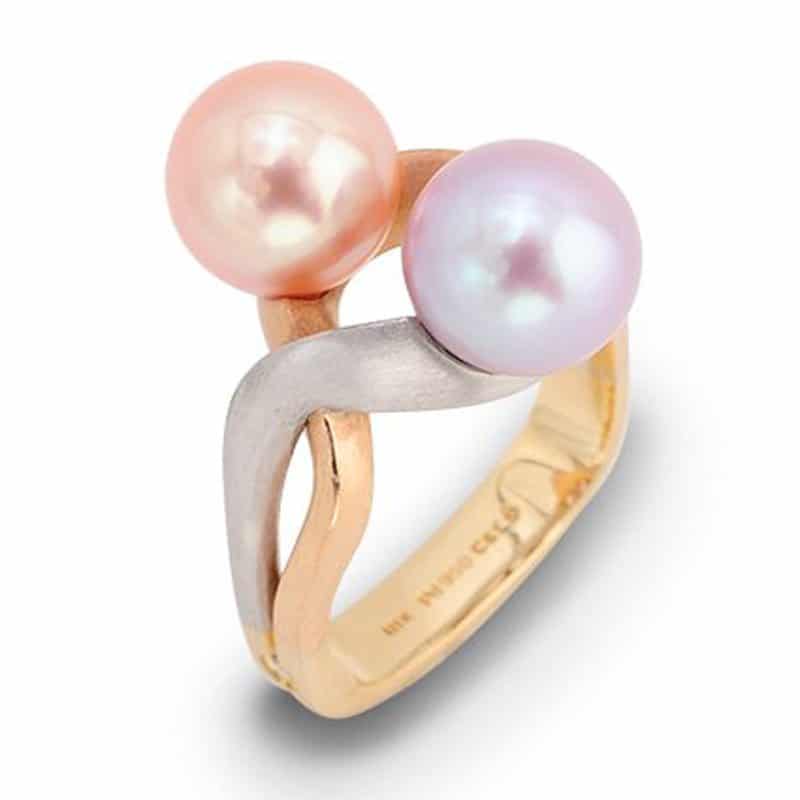
While often more abundant, top-tier Freshwater pearls are valued for their remarkable variety of shapes and colors. Modern cultivation techniques have allowed for the creation of Freshwater pearls that rival saltwater varieties in luster and surface quality. Our Fusion Freshwater Pearl Ring demonstrates how these gems can be integrated into high-end, daily-wear designs.
Understanding Pearl Quality and Grading
The value of a pearl is determined by a rigorous set of standards. At Coffin and Trout, we curate only those gems that meet our exacting requirements for brilliance and integrity.
Separating Myth from Mastery: The Truth About Pearls
In the world of fine jewelry, several misconceptions persist regarding the care and quality of pearls. To make an informed investment, it is important to separate tradition from technical reality.
Myth: Pearls must be stored in water or a moist environment to stay hydrated.
Fact: While pearls are organic, submersion in water can actually damage the silk cord of a necklace or weaken the organic adhesives used in settings. Pearls simply require the natural humidity found in ambient air to prevent the nacre from becoming brittle.
Myth: Natural pearls are superior to cultured pearls in modern luxury jewelry.
Fact: Natural pearls are exceedingly rare and often lack the luster and spherical symmetry required for high-end jewelry. Cultured pearls are the industry standard for luxury because they allow for a partnership with nature that produces consistent, high-quality gems with superior nacre thickness and radiant luster.
Myth: All white pearls are the same.
Fact: The “white” of a pearl is composed of a body color and an overtone. For example, an Akoya pearl may have a bright white body with a rose overtone, while a South Sea pearl may have a warm, creamy body with a silver overtone. These nuances significantly impact how the jewelry complements your skin tone and chosen metal.
Mastering the Style of Modern Pearls
The era of pearls being reserved for formal galas has evolved. Today, luxury pearl jewelry is a versatile staple that bridges the gap between casual sophistication and evening elegance.
The Power of the Statement Piece
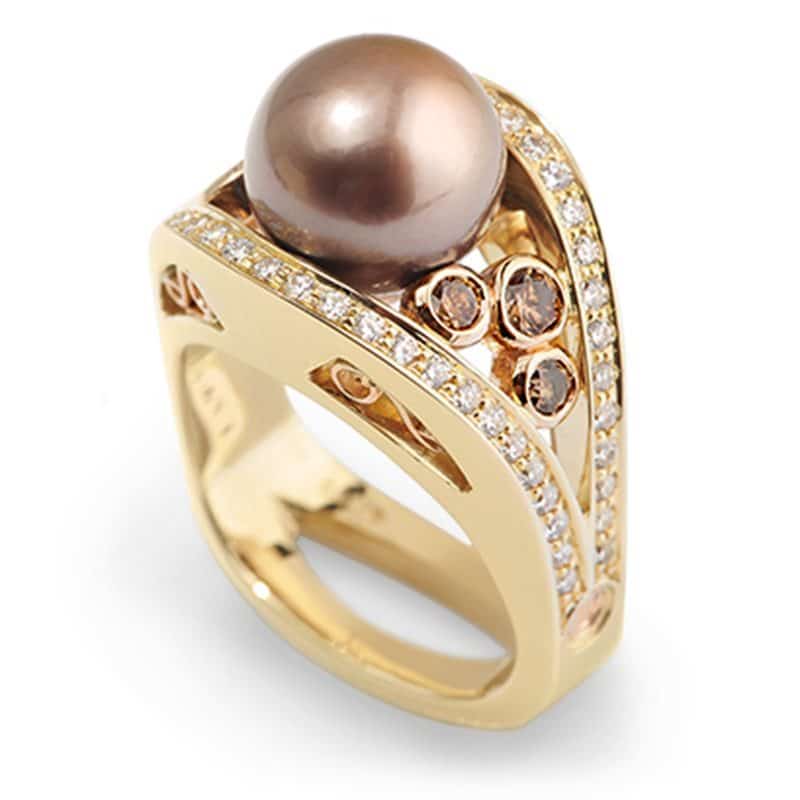
A single, well-placed pearl can define an entire look. A bold ring, like the Interlace Tahitian Pearl and Yellow Gold Ring, provides a focal point that communicates confidence and refined taste.
Layering and Texture
Mixing different pearl types or combining them with diamonds and varied gold alloys adds depth to your wardrobe. The contrast between the organic curves of a pearl and the precise facets of a diamond creates a visual harmony that is both energetic and timeless.
Occasion-Based Styling
- Professional: A simple pearl pendant or stud earrings provide a polished, authoritative finishing touch.
- Casual: A pearl ring paired with denim and a crisp linen shirt elevates an everyday outfit without feeling overdone.
- Evening: Multi-layered strands or large-diameter South Sea pendants provide the necessary drama for formal settings.
Cultured vs. Natural Pearls: The Reality of Modern Luxury
It is a common misconception that natural pearls (those formed in the wild without human assistance) are the only standard for luxury. In truth, natural pearls are exceptionally rare and often irregular in shape, making them more of a collector’s curiosity than a practical choice for fine jewelry.
Cultured pearls are the gold standard of the modern luxury industry. By carefully introducing a nucleus into the mollusk, master pearl farmers can guide the creation of a gem that is beautiful, durable, and consistent in quality. This process is not a replacement for nature; it is a partnership with it. Every cultured pearl we offer has been nurtured for years, resulting in a gem of significant value and beauty.
Preserving the Legacy: Pearl Care and Maintenance
Pearls are organic gems and require a different level of care than diamonds or sapphires. They are sensitive to acids, humidity, and chemicals, but with the right habits, they will maintain their luster indefinitely.
Daily Care
Your pearls should be the last thing you put on and the first thing you take off. Apply perfumes, hairsprays, and lotions before putting on your jewelry to prevent the chemicals from dulling the nacre. After wearing, a gentle wipe with a soft, lint-free cloth will remove any trace of skin oils.
Cleaning
Never use ultrasonic cleaners or harsh detergents. If your pearls need a deeper clean, use a very mild solution of warm water and non-detergent soap. Dampen a cloth, wipe the pearls, and dry them immediately with a soft towel.
Storage
Avoid humidity extremes when choosing where to keep your pearl jewelry. Store them in a soft pouch, separate from harder gemstones that could scratch the surface.
The Coffin and Trout Commitment
At Coffin & Trout, we are makers first. Every pearl piece is designed and manufactured in-house at our Arizona studio, ensuring that every setting is as precisely engineered as the gem it holds. Our process, from the initial CAD rendering to the final hand-polish at the bench, is the reason we are among the most awarded jewelers in the country, with over 16 AGTA Spectrum Awards for design excellence.
We invite you to explore our Pearl Collections and experience the C&T difference—where unrivaled recognition meets family integrity. If you are looking for something truly singular, we invite you to visit our Chandler studio to collaborate on a custom design that is distinctly yours.
Frequently Asked Questions
What are the most valuable luxury types of pearls?
South Sea pearls are generally considered the most valuable due to their impressive size, rarity, and the time required for cultivation. However, high-grade Tahitian and Akoya pearls with exceptional luster and surface quality also command significant value.
Can I wear pearl jewelry every day?
While pearls can be worn daily, they require mindful care. Because they are organic and softer than most gemstones, they should be worn with caution to avoid impact or abrasion. Following proper maintenance and the “last on, first off” rule will help them remain a vibrant part of your wardrobe.
How can I tell if a pearl is high quality?
Look for “lustre” first. A high-quality pearl should have a sharp, bright reflection. The surface should be smooth, and the pearl should feel substantial.
Why does Coffin and Trout focus on cultured pearls?
Cultured pearls allow for a partnership with nature that produces gems of consistent beauty, shape, and luster. This process ensures we can provide our clients with high-quality pearls that meet our rigorous standards for fine jewelry.